
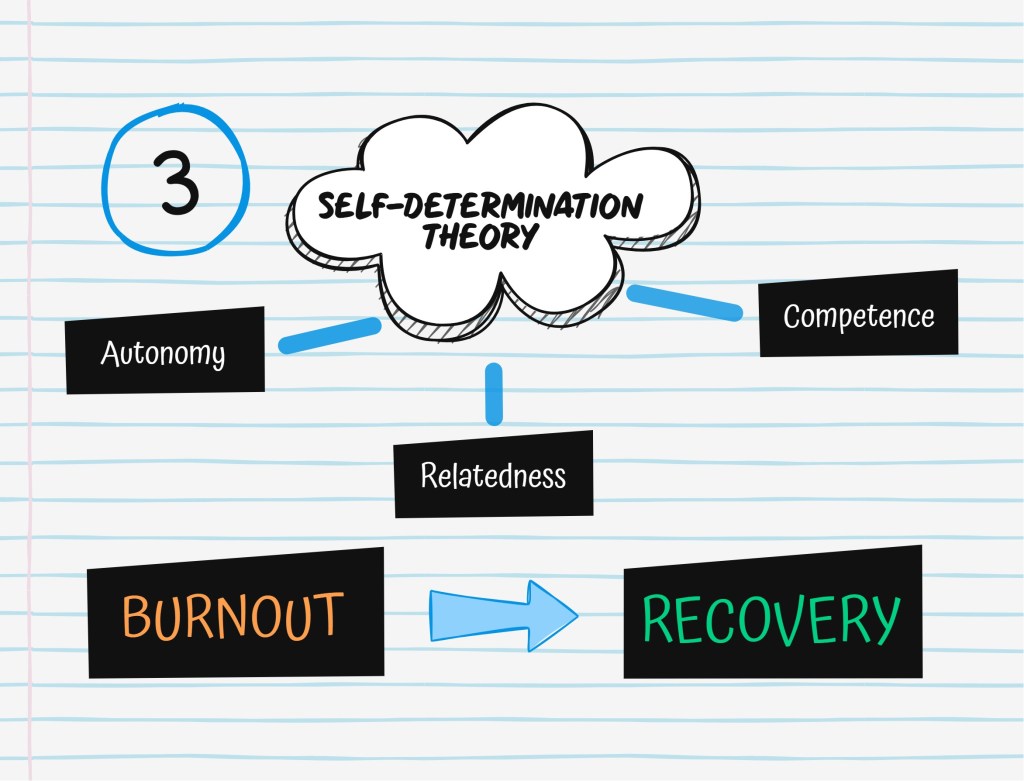
This post continues our exploration of SDT in burnout recovery. Part 1 introduced the foundations of self‑determination theory (SDT) and how autonomy, competence, and relatedness help explain autistic burnout and support recovery.
Part 2 considered how SDT can help you navigate the challenges of burnout, rebuild confidence in your parenting, and feel less isolated.
In Part 3, we’ll consider how these same principles can guide your day-to-day support of your child’s recovery.
Rethinking burnout recovery: an SDT perspective
Burnout recovery is not quick or linear. It often involves steps forward, steps back, and long periods of apparent standstill. SDT helps reframe progress: not as a return to previous expectations, but as a gradual rebuilding of the safety, trust, and capacity that allows autonomy, competence and relatedness to grow.
This reframing can reduce the urgency many parents feel. Instead of worrying that things aren’t improving quickly enough, you can concentrate on rest, connection, and small signs of recovery. Progress becomes about:
- increasing feelings of safety
- stabilising energy
- rebuilding trust
- supporting autonomy, competence, and relatedness.
You no longer have to carry the pressure of trying to “get your child back to normal”. Instead, your role focuses on helping them build a life that feels manageable, safe, and sustainable. Recovery is not about returning to the way things were, but about supporting them to thrive in ways that respect their needs and limits.
Practical ways to apply SDT at home
Small, consistent shifts in how you respond, communicate, and shape the environment can make a meaningful difference. These changes don’t “fix” burnout – they create the conditions in which recovery becomes possible.
Normalise rest and recovery
Children in burnout often feel guilty or ashamed about needing rest, especially if they have absorbed messages that productivity, attendance, or perseverance matter more than their wellbeing. You can help counter this by reframing rest as:
- A skill – something healthy people do deliberately to maintain their energy and wellbeing.
- A strategy – a planned and predictable part of the day that helps reduce fatigue, stress, and overwhelm before they build up.
- A way of listening to their body – recognising and responding to signs that they need time to recover, and understanding that doing so supports their health.
This approach helps children see rest as a valid and purposeful response to their needs, rather than something they have to earn. In doing so, it reduces internal pressure and supports a greater sense of autonomy during recovery.
Use autonomy‑supportive language
Language that reduces pressure and validates your child’s internal experience can support feelings of safety and regulation. Instead of directing, prompting, or persuading, aim for gentle acknowledgement:
- “That makes sense.”
- “We can pause.”
- “We can wait until this feels more manageable.”
- “This is here if you want it.”
- “We can come back to this later.”
Over time, this kind of language can help interactions feel safer and less pressured, strengthening trust and making it easier for your child to engage when they have the capacity.
Create opportunities for choice and control
A sense of control can support autonomy and help your child feel safer, even when their capacity is very limited. The choices on offer don’t need to be significant. Small, low-demand decisions can help your child experience a sense of control without adding pressure:
- “Would you like the lights on or off?”
- “Would you rather stay here or move to the sofa?”
- “Would you rather listen to music or read together?”
However, if your child finds even simple choices overwhelming or demand-inducing, it may be more helpful to make options available without requiring a response:
- “The lights can stay as they are, or we can change them if you’d like.”
- “The sofa is comfy if you feel like moving.”
- “We could do something later if you’d like.”
Even small opportunities for self-direction can help your child feel more in control of their day and better able to influence what happens around them.
Support self-understanding
Gently naming what you observe can help your child understand their internal state:
- “You seem really tired.”
- “This looks like a lot to deal with.”
- “I wonder if everything feels a bit overwhelming right now.”
You don’t need to be right. The goal isn’t to identify your child’s feelings for them, but to offer language they can accept, reject, or build on if it feels helpful.
Over time, this can help them develop a better understanding of their own emotions, energy levels, and needs. It can also reduce shame by communicating that their experiences are valid and understandable.
Adjust the environment
Changing the environment is often a key element of burnout recovery. Small adaptations can reduce overwhelm, conserve energy, and help your child feel safer. Environmental adjustments may include sensory, social, emotional, and practical changes, depending on what your child finds most draining.
- Reduce sensory demands where possible – lowering noise, dimming lights, avoiding strong smells, reducing time in crowded or overwhelming environments, and limiting unpredictability.
- Create flexible rhythms rather than rigid routines, allowing activities to ebb and flow with your child’s capacity.
- Provide low-demand spaces where your child can rest, regulate, or spend time alone without needing to explain themselves.
- Make transitions gentler by allowing extra time, giving advance notice where helpful, or offering quieter alternatives.
- Provide sensory supports proactively – headphones, weighted blankets, fidget items, comfortable clothing, dim lighting – before signs of overwhelm begin to build.
These environmental adjustments support competence by reducing unnecessary barriers and making everyday activities more manageable within your child’s current capacity.
Prioritise connection
Connection is not an “extra” – it’s the foundation of recovery. When your child experiences understanding, acceptance, and safety, their nervous system has more opportunity to regulate and recover.
- Spend time together without goals or expectations (if they are comfortable with company).
- Engage in low‑demand shared activities such as drawing, reading, or listening to music (if they wish to).
- Follow your child’s interests and join them in activities they enjoy, when invited.
- Prioritise understanding and connection over correction whenever possible.
- Accept communication differences without pressure to talk, engage, or perform.
- Look for small moments of comfort, enjoyment, or connection, such as a shared joke, a cosy blanket, or a favourite snack (if possible).
Over time, these low-pressure moments help rebuild trust, strengthen connection, and increase your child’s sense of safety within the relationship.
Demonstrate self‑regulation
Children often learn how to respond to stress, overwhelm, and uncertainty by observing the adults around them. While you don’t need to be calm all the time, modelling healthy ways of regulating your emotions can help create a sense of safety and stability.
This might include:
- slowing your breathing when you feel stressed
- speaking in a calm, steady voice
- taking a short break when you need one
- naming your coping strategies (e.g., “I’m going to take a moment to breathe” or “I think I need a few minutes of quiet time”).
By showing that everyone has limits and needs ways to regulate themselves, you help normalise self-care and emotional regulation. This can strengthen your connection with your child and make it less likely that situations escalate when stress levels are high.
Prioritise repair after conflict
Burnout can increase tension within families. Disagreements, misunderstandings, and difficult moments are inevitable. What matters most is not avoiding conflict altogether, but repairing the relationship afterwards.
Repair can be as simple as acknowledging what happened and reaffirming your connection:
- “That was hard for both of us.”
- “That wasn’t easy for either of us.”
- “We can try again when things feel calmer.”
These moments help your child learn that relationships can withstand mistakes, strong emotions, and difficult interactions. They also reinforce a sense of safety and connection, showing that conflict need not lead to rejection, blame, or disconnection.
Use collaborative problem‑solving (when capacity allows)
When your child has enough energy and emotional capacity, involve them in finding solutions to everyday challenges. This might include discussing routines, adjusting expectations, exploring what helps during difficult moments, or finding ways to make tasks feel more manageable.
The aim is not to reach a perfect solution, but to help your child feel heard, respected, and involved in decisions that affect them. Working together in this way can reduce tension, strengthen trust, and help your child develop confidence in their ability to identify needs, solve problems, and advocate for themselves.
If your child is overwhelmed, exhausted, or unable to engage, save these conversations for another time. Collaborative problem-solving is most effective when your child has the capacity to participate without it feeling like another demand.
Create a shared language for capacity
Many children find it difficult to explain how they are feeling, especially when they are overwhelmed, exhausted, or struggling to process their thoughts. It can help to develop a simple, shared way of communicating capacity to make these conversations easier.
This might involve using a number scale, colours, symbols, energy levels, or other visual cues that make sense to your child. For example, they might use green, amber, and red to indicate how manageable things feel, or a scale from 1 to 5 to show how much energy they have available.
When capacity becomes easier to recognise and talk about, families are often better able to adjust expectations, reduce misunderstandings, and respond to challenges before they escalate.
Redefine progress
Progress during burnout recovery is subtle and non‑linear. Instead of measuring progress by a return to old abilities, notice the small signs that your child’s capacity is rebuilding:
- having more energy available for everyday activities
- recovering more quickly from stress or overwhelm
- showing greater emotional regulation
- expressing curiosity, interest, or enjoyment
- seeking connection or spending more time with others
- finding previously overwhelming situations more manageable
- showing increased confidence, flexibility, or willingness to engage.
These small “glimmers” can be meaningful signs that recovery is underway. They may seem insignificant in isolation, but over time they often reveal a gradual increase in safety, energy, and capacity.
Read our post Glimmers, green shoots and breakthroughs in burnout recovery for more information.
“My child went swimming this week – in a public pool! We booked the quietest session we could find, but I was still worried she’d be too anxious to get in the water with other people there. It was such a joy to see her splashing about having fun with her sister.”
R’s Parent
Common misunderstandings
These approaches are sometimes misunderstood, especially by people who are unfamiliar with autistic burnout or with SDT.
- Supporting autonomy does not mean removing all boundaries or letting your child “do whatever they want.” It means reducing pressure so their nervous system can recover.
- Reducing demands right now does not mean lowering expectations forever. It means recognising that your child’s current capacity is limited – and that pushing harder will only deplete them further.
- Recognising that what may appear to be avoidance is often a protective response to overwhelm, anxiety, burnout, or unmet needs. By reducing stress and increasing safety, children are more able to re-engage when they are ready.
- Neurodivergent children are not lacking resilience, motivation, or willpower. They are not choosing to struggle, refusing to cope, or failing to try hard enough. They are responding to environments that have pushed them far beyond their limits. Burnout is a sign of overload, not a character flaw.
It’s common for parents to face criticism or misunderstanding from people who don’t see the full picture or who rely on outdated stereotypes. You may feel pressure to “push harder” or worry that others think you’re being too lenient. These experiences can be painful and isolating – but your child’s needs are more important than other people’s opinions.
You know your child better than anyone else. While no parent has all the answers, your observations and understanding of your child’s needs matter and deserve to be taken seriously. Supporting their needs is not permissive; it is protective. It is the foundation of their wellbeing and recovery.
A different way forward
Recovering from burnout isn’t about returning to how things used to be. It’s about building a way of living that better fits your child’s sensory, emotional, and cognitive needs.
When children are supported in their autonomy, competence, and relatedness, they begin to reconnect with their energy, interests, and sense of self. Motivation can begin to come from within again – not from pressure, but from safety, curiosity, and capacity.
Progress may be slow and uneven, but it is real. And it’s built on a far more solid foundation than compliance: that is, trust, regulation, and genuine wellbeing.
First published:
Last updated:
 Autistic Burnout - Family Stories
Leave a comment