
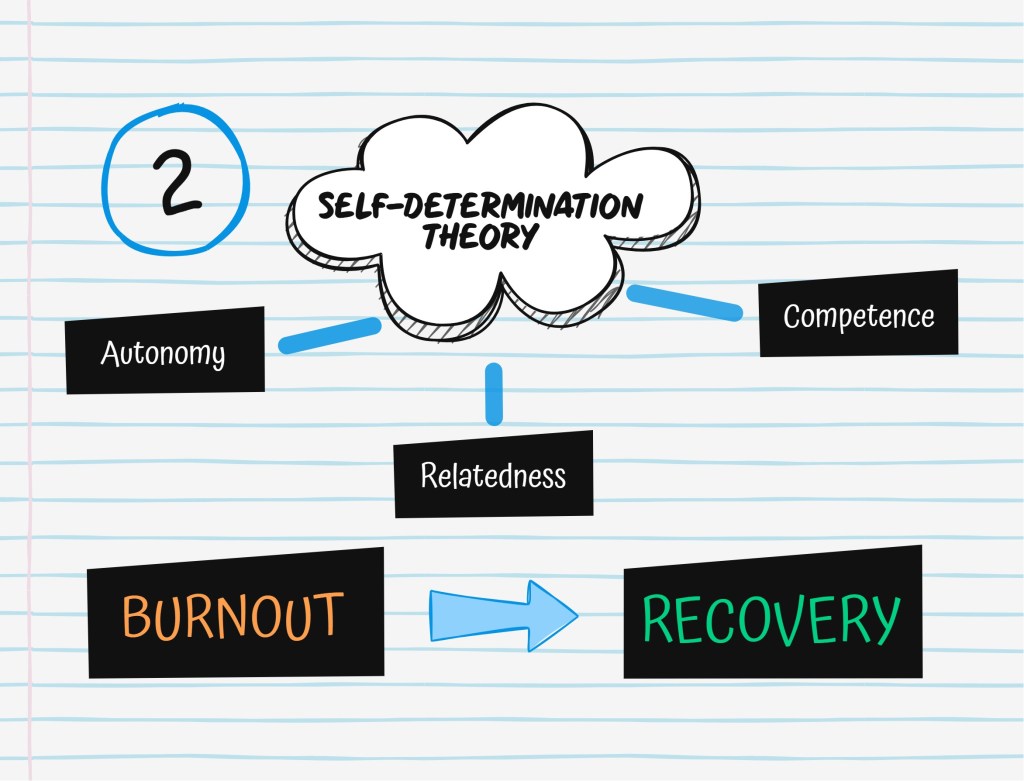
This post follows on from Part 1, which introduced the foundations of self‑determination theory (SDT) and how autonomy, competence, and relatedness can help explain autistic burnout and support recovery. The next step is understanding what this means for you as a parent.
In Part 2, we’ll look at how SDT can help you navigate the challenges of burnout, rebuild confidence in your parenting, and feel less isolated.
How can SDT support you as a parent?
SDT can support you as a parent by offering a clear, evidence‑based way to understand your own needs while caring for a child in burnout. When your child is overwhelmed, withdrawn, or unable to attend school, your own wellbeing is often affected too. The ongoing stress, uncertainty, and pressure can leave you exhausted, isolated, and unsure how best to help.
SDT provides a framework for recognising what you need in order to stay afloat. It helps you identify ways to protect your limited energy, rebuild your confidence, and maintain your wellbeing so you can continue supporting your child through recovery without losing yourself in the process.
Below is a structured explanation of how SDT’s three core needs — autonomy, competence, and relatedness — can support you as you navigate this difficult time.
“When my daughter crashed out of school, I felt under enormous pressure. Everything seemed chaotic and out of my hands. I needed to feel like I was doing something positive – taking charge in some way. So I started learning as much as I could about burnout. That meant I wasn’t solely relying on school staff, the LA or the NHS for guidance. I could make my own informed decisions.”
R’s Parent
Autonomy – regaining your sense of control
Autonomy is about feeling that your actions come from your own values rather than from pressure, fear, or external demands.
Parenting a child in burnout often places you under intense scrutiny from schools, the local authority, and health/social services. This can create a profound sense of lost autonomy – as though decisions about your child and your family are happening around you rather than with you. Reclaiming even small areas of control can make a meaningful difference to how you feel.
Making informed choices – learning so your decisions come from understanding, not pressure
When your child is in burnout, you may feel pulled between school expectations, professional opinions, and your own instincts. SDT encourages you to build a foundation of knowledge so you feel confident about your choices.
This can include:
- Learning about burnout, nervous‑system overwhelm, and school‑related stress so your child’s behaviour makes sense rather than feeling frightening or unpredictable.
- Understanding what helps and what causes harm, so you can make informed decisions and confidently question approaches that don’t fit your child’s needs.
- Gathering information from multiple sources, rather than relying solely on school or services, which reduces your sense of being at the mercy of external systems.
As your understanding grows, your decisions are more likely to reflect your own judgement and your child’s needs rather than other people’s expectations.
Our Useful Resources page offers some suggestions on websites and books to help build your foundation of knowledge about burnout.
Clarifying your values so your decisions feel self‑directed
Burnout often throws families into crisis mode. You end up reacting to schools, professionals, attendance demands, and expectations. SDT helps you step back and ask:
- What matters most to me right now?
- What kind of parent do I want to be in this situation?
- What does my child actually need, rather than what others expect?
When your actions align with your values, decisions often feel clearer and easier to defend.
Choosing your own narrative instead of absorbing blame
Parents of children experiencing burnout are often made to feel responsible for their attendance, behaviour, or motivation. Reframing the story you tell yourself can help restore your sense of autonomy.
Instead of thinking, “I’m failing to get them into school,” you can shift to, “I’m responding to my child’s needs and protecting their wellbeing.”
This change in perspective reduces shame and changes your role. Instead of feeling responsible for “fixing” your child or trying to motivate them with rewards, consequences, or constant encouragement, you can focus clearly on supporting their underlying needs and creating the conditions that enable recovery.
Choosing what to ignore
Autonomy isn’t only about what you do – it’s also about what you stop doing. Parents often feel pressured by:
- attendance targets
- comparisons with other families
- well‑meaning but unhelpful advice
- cultural expectations about “resilience” or “toughening up”.
In many cases, you can choose which pressures are irrelevant to your child’s wellbeing, and let them go.
Honouring your emotional reality
Autonomy includes emotional autonomy – the right to feel what you feel without self‑criticism. SDT supports you in:
- acknowledging grief, fear, anger, or exhaustion without judging yourself for having those feelings
- responding from a more grounded place rather than from panic.
You’re often better able to support your child when you aren’t fighting your own emotions.
“One of the most important new parenting principles we had to learn was that you can’t reduce stress by adding more pressure. Once we stopped pushing, and properly took the time to see our child and understand her needs, she became calmer and the long road to recovery began.”
R’s Parent
Competence – rebuilding confidence when the usual parenting tools make things worse
When you lose autonomy, you’ll likely also feel less competent. You no longer trust the familiar parenting strategies you once relied on, but you’re unsure of what to do instead. This uncertainty can be deeply distressing. Many parents describe feeling bewildered because the approaches that everyone tells you to use seem to increase distress rather than reduce it.
A key part of this is understanding what burnout actually is. When you learn about the causes of burnout and how it affects your child, their behaviour becomes less mysterious and frightening. Instead of guessing, you begin to recognise patterns. You may start noticing that what looked like refusal was actually exhaustion, or that meltdowns often followed sensory overload or excessive social demands. This alone increases your sense of competence.
This understanding also helps you develop new parenting approaches that fit your child’s current state. The standard behaviour-management playbook gives way to need-based strategies: reducing non-essential demands, allowing more recovery time, adjusting sensory input, communicating more gently, or accepting that some tasks may simply be too much for now.
Your confidence will grow as you learn to interpret your child’s signals. You may start noticing subtle signs you previously missed: your child becoming quieter, more irritable, needing darkness or silence, or struggling to process conversation. Understanding these early cues allows you to respond before a crisis hits. Instead of firefighting, you’re anticipating needs.
It’s also important to notice small wins. Burnout recovery is slow, and progress often appears in tiny moments: a brief moment of connection, a reduced meltdown, or a small increase in capacity. Over time, these small moments help you trust that lots of rest, increased felt safety, and reduced pressure really are making a difference. Our post, Glimmers, green shoots and breakthroughs in burnout recovery, explores this topic in more detail.
Gradually, you may notice yourself spending less time second-guessing every decision or replaying difficult moments in your head. Instead of constantly feeling as though you’re getting things wrong, you begin responding more calmly and with greater confidence in your understanding of your child.
Over time, you’ll learn to trust your instincts again. External criticism and negative self-talk may have undermined your confidence, but as you reconnect with your own judgement, you’ll begin to see that you do understand your child, you can read their needs, and you are capable of guiding them through recovery.
It’s time to let go of any guilt about not preventing your child’s burnout, or shame about using standard parenting techniques in the past. Our post on Parental guilt when your child or young person is experiencing burnout may help you move past these emotions and focus on moving forward.
“When my daughter first entered burnout, I was overwhelmed by the stress of trying to understand her needs, work with the school, get medical evidence so they would authorise her absences, apply for an EHCP, seek help from CAMHS, and resolve the differences of opinion my husband and I were having about how to handle the situation.
R’s Parent
I started having panic attacks; I was in such a state.
I turned up at an evening session of my local parent/carer support group, practically on my knees. They were wonderful: they picked me back up and helped put me back together. I don’t know what would have done without them.”
Relatedness – reducing isolation and strengthening connection
Parenting a child in burnout can be profoundly isolating. Daily life shrinks. Social contact becomes harder. Friends and family may not understand what you’re going through, and professionals may minimise your concerns. This loss of connection can leave you feeling alone, unseen, and unsupported. Relatedness is a core psychological need – and rebuilding it is essential not only for your wellbeing, but for your ability to effectively support your child.
There are several ways to strengthen your sense of connection and support.
Finding people who understand
Connection feels most nourishing when you don’t have to explain or justify your child’s behaviour. Seeking out other parents with lived experience of burnout, school attendance difficulties, or neurodivergence can offer a sense of belonging that everyday social circles often can’t. Being understood reduces shame and reduces your sense of isolation.
Letting yourself receive support
When your child is struggling, you may slip into the role of constant caregiver. It’s easy to forget that you need care too. Allowing trusted people to listen, help with practical tasks, or simply sit with you strengthens your capacity to cope. Receiving support is not a luxury – it’s a protective factor.
If you need more convincing, our post “You can’t pour from an empty cup” – A self-care guide for parents of children and young people in burnout might help persuade you.
Strengthening connection within your family
Burnout can place enormous strain on relationships at home. Your child may need a significant reduction in social demands, so the familiar ways you used to connect may no longer be available. SDT encourages you to shift from expecting typical engagement to noticing quieter forms of connection: shared space, gentle co-regulation, parallel activities, quiet humour, or simply being near each other without pressure. These low-demand moments help rebuild a sense of safety and togetherness, even when life feels restricted.
A key part of strengthening connection is understanding behaviour as a form of communication. When you view your child’s reactions as signals of unmet needs rather than as defiance or a lack of motivation, your responses naturally shift. Pressure decreases. Curiosity increases. Instead of escalation, there is space to wonder:
- What is my child’s behaviour telling me?
- What need is going unmet?
- What would help them feel safer right now?
This perspective helps interactions become less tense by reducing conflict. When you respond to needs rather than behaviours, your home environment becomes calmer and more connected for everyone – not just your child.
Reducing contact with people who drain you
Relatedness isn’t only about adding supportive connections – it’s also about protecting yourself from interactions that leave you feeling judged, dismissed, or misunderstood. It may be necessary to set boundaries with people, including friends or family members, whose reactions undermine your confidence or increase your stress. Protecting your limited energy is essential when you’re caring for a child in burnout.
Sometimes the kindest choice for yourself is to create distance from those who don’t understand your situation, make assumptions about your parenting, or blame you for your child’s challenges. Reducing contact with these individuals is an act of self‑protection that allows you to stay focused on what truly matters.
This can also apply to social media. Some online spaces provide understanding, validation, and practical support, while others can leave you feeling judged, overwhelmed, or inadequate. Pay attention to how different content affects you and consider reducing your exposure to accounts, groups, or discussions that increase stress or undermine your confidence. Protecting your emotional wellbeing online is just as important as protecting it offline.
Reconnecting with yourself
Relatedness isn’t only about your relationships with others – it also includes your relationship with yourself. Burnout can leave you feeling disconnected from your identity, interests, and emotional needs. SDT encourages you to reclaim small pieces of your own life: a hobby, a walk, a book, or a conversation with a friend. These moments help you feel more like you again and strengthen your sense of belonging in the world.
Caring for a child in burnout doesn’t mean your entire identity must revolve around parenting. In fact, it’s healthier if it doesn’t. Making space to build connection outside your caregiving role supports your wellbeing and replenishes the emotional resources you need at home. You may feel too overwhelmed to take up new hobbies or meet new people, but even an hour a week spent engaging with something that interests you can make a meaningful difference.
Reconnecting with yourself isn’t self‑indulgence – it’s part of staying whole while supporting your child through this difficult period.
Feeling part of something bigger
Understanding burnout, trauma, and nervous‑system responses can help you see your experience in a broader context. You’re not alone; you’re part of a community of parents navigating similar challenges. Feeling these connections reduces isolation and restores meaning.
When your need for relatedness is supported, you feel less alone, more grounded, and more emotionally resourced. Your confidence becomes something your child can lean on – a quiet, powerful form of support that helps them feel safe enough to recover.
Join us for Part 3, in which we’ll consider how these same principles can guide your day-to-day support of your child’s recovery.
First published:
Last updated:
 Autistic Burnout - Family Stories
Leave a comment