Useful Resources
There is a small but growing number of resources regarding burnout in children and young people. Almost all information published so far focuses on autistic burnout, but it is now being recognised that burnout is also a risk for ADHDers and PDAers, and potentially other neurodivergent individuals.
Websites
Many websites and articles now discuss burnout and may be useful at different stages of your burnout journey. Here are some of our favourites.
Key concepts
The Barriers to Education website offers an excellent introduction to burnout in children and young people. Aimed at professionals and parents, the burnout section explains what burnout is, why it happens, and offers a framework for promoting recovery.
The Autism Understood website, created by Spectrum Gaming, has a page on autistic burnout that young people will find accessible.
PAPYRUS Prevention of Young Suicide has an informative article on understanding autistic burnout.
NHS Leicestershire Partnership NHS Trust’s Autism Space offers a brief yet valuable description of autistic fatigue and burnout, along with some coping strategies.
Dr Megan Anna Neff of Neurodivergent Insights has a guide to help distinguish between autistic burnout and depression.
In-depth help and support
Viv Dawes offers an extensive range of resources, books, training and support for people who need to understand autistic burnout, including professionals, parents, young people and children.
Jodie Clarke has also created a range of webinars and books focusing on autistic burnout in children and young people.
Tanya Valentin offers podcasts and an extensive subscription-based course, From Burnout to Balance, for parents supporting children and young people experiencing burnout.
Helen Edgar of Autistic Realms has collated an extensive list of articles and resources on autistic burnout, including her Thinking Person’s Guide to Autism: Supporting Your Young Person Through Autistic Burnout article.
Help with individual aspects of burnout
The Autistic Library collates neuroaffirming information from a wide range of sources, including books, videos, research papers and services. Topics include areas like daily care and accessible health services, which can be highly relevant during burnout.
Books
The first book about burnout in young people was published in 2023. As recognition of burnout increases, we hope to add more books to this list.
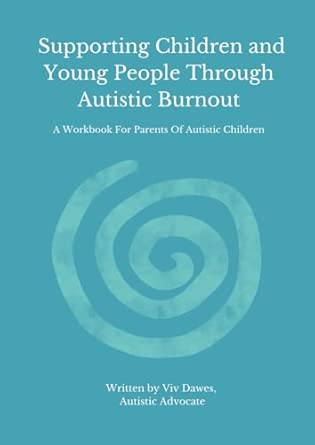
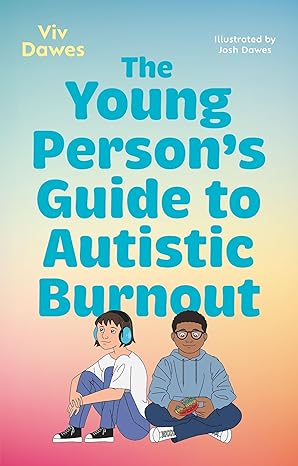
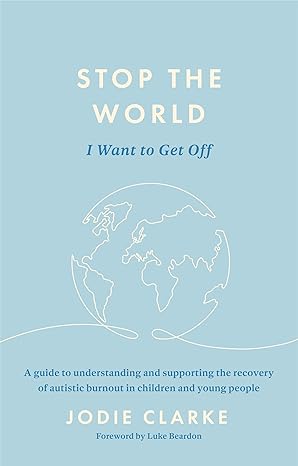
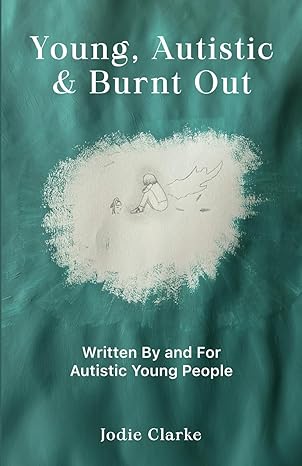
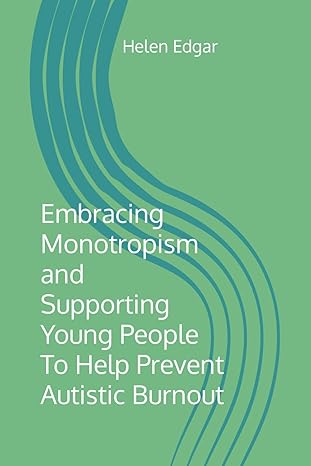
A number of organisations and individuals have collated lists of recommended books if you’re seeking information about neurodiversity more generally.
Videos
Research Papers
Ali, Dorota & Bougoure, Mackenzie & Cooper, Brodie & Quinton, Alice & Tan, Diana & Brett, Jack & Mandy, William & Maybery, Murray & Magiati, Iliana & Happe, Francesca. (2025). Burnout as experienced by autistic people: A systematic review. Clinical Psychology Review. 122. 102669. https://doi.org/10.1016/j.cpr.2025.102669
Ali, D., Mandy, W., & Happé, F. (2026). How does ‘autistic burnout’ feel? A qualitative study exploring experiences of earlier and later-diagnosed autistic adults. Autism, 30(4), 1014–1027. https://doi.org/10.1177/13623613261422117
Arnold, S. R., Higgins, J. M., Weise, J., Desai, A., Pellicano, E., & Trollor, J. N. (2023). Confirming the nature of autistic burnout. Autism, 27(7), 1906-1918. https://doi.org/10.1177/13623613221147410
Arnold, S. R., Higgins, J. M., Weise, J., Desai, A., Pellicano, E., & Trollor, J. N. (2023). Towards the measurement of autistic burnout. Autism, 27(7), 1933-1948. https://doi.org/10.1177/13623613221147401
Benatov, J., Sarel-Mahlev, E., & Bar Yehuda, S. (2025). Camouflage, burnout-exhaustion, and depression in autistic adults. Autism in Adulthood. https://doi.org/10.1089/aut.2024.0147
Bougoure, M., Zhuang, S., Brett, J. D., Maybery, M. T., English, M. C., Tan, D. W., & Magiati, I. (2026). Measuring autistic burnout: A psychometric validation of the AASPIRE Autistic Burnout Measure in autistic adults. Autism, 30(1), 20-36. https://doi.org/10.1177/13623613251355255
Brattberg, G. (2006). PTSD and ADHD: Underlying factors in many cases of burnout. Stress and Health, 22(5), 305–313. https://doi.org/10.1002/smi.1112
Cage E and McManemy E (2022) Burnt Out and Dropping Out: A Comparison of the Experiences of Autistic and Non-autistic Students During the COVID-19 Pandemic. Front. Psychol. 12:792945. https://doi.org/10.3389/fpsyg.2021.792945
Clarey, M. M., Abel, S., Ireland, M. J., & Brownlow, C. (2025). Autistic burnout on reddit: A Sisyphean struggle with daily tasks. Journal of Autism and Developmental Disorders, 1-13. https://doi.org/10.1007/s10803-025-06765-4
Clarey, M. M., Ireland, M. J., Abel, S., & Brownlow, C. (2026). Beyond Exhaustion: Shame, Identity Disruption, and Functional Collapse in Autistic Burnout. Autism. Advance online publication. https://doi.org/10.1177/13623613261444797
Ferguson, A., Martin, D., & Pearson, A. (2024). “It has shown me how much I am capable of”: An Exploration of Autistic Burnout Experiences in Motherhood. Autism in Adulthood. https://doi.org/10.1089/aut.2024.0282
Hauck, Simone. (2025). Functional iron blockade in chronic stress and neurodivergence: a perspective on adaptive stress physiology. Frontiers in Psychiatry. 16. https://doi.org/10.3389/fpsyt.2025.1701625
Higgins, J. M., Arnold, S. R. C., Weise, J., Pellicano, E., & Trollor, J. (2021). Defining autistic burnout through experts by lived experience: Grounded Delphi method. Autism in Adulthood, 3(2), 159-172. https://journals.sagepub.com/doi/10.1177/13623613211019858
Hossain, M. and Bain, J. (2025), Beyond Behavior: Understanding ADHD Burnout and the Need for Belonging in UAE Schools. Psychology in the Schools, 62: 4265-4275. https://doi.org/10.1002/pits.70000
Jahandideh, P., Seyedmirzaei, H., Rasoulian, P. et al. Low Battery Alarm; A Scoping Review of Autistic Burnout. J Autism Dev Disord (2025). https://doi.org/10.1007/s10803-025-06860-6
Keville, S., Meek, C., & Ludlow, A. K. (2021). Mothers’ perspectives of co-occurring fatigue in children with autism spectrum disorders. Fatigue: Biomedicine, Health & Behavior, 9(4), 209–226. https://doi.org/10.1080/21641846.2021.2008169
Mantzalas, J., Richdale, A. L., Adikari, A., Lowe, J., & Dissanayake, C. (2022). What is autistic burnout? A thematic analysis of posts on two online platforms. Autism in Adulthood, 4(1), 52-65. https://doi.org/10.1089/aut.2021.0021
Mantzalas, J., Richdale, A. L., & Dissanayake, C. (2022). A conceptual model of risk and protective factors for autistic burnout. Autism Research, 15(6), 976-987. https://doi.org/10.1002/aur.2722
Mantzalas, J., Richdale, A. L., Li, X., & Dissanayake, C. (2024). Measuring and validating autistic burnout. Autism Research, 17(7), 1417–1449. https://doi.org/10.1002/aur.3129
Mason, H. (2024). Autistic burnout: Exploring autistic perspectives on treatment availability and effectiveness [Thesis; Electronic]. https://dc.arcabc.ca/applied-psychology-bachelor-arts-honours-theses/autistic-burnout-exploring-autistic-perspectives
Mason, H. (2024). Autistic burnout: Exploring autistic perspectives on treatment availability and effectiveness [Presentations (communicative events)]. Douglas College Student Research Days (2024). https://dc.arcabc.ca/dc-student-research-days/autistic-burnout-exploring-autistic-perspectives-treatment-availability
McGuinness, K. (2021). An evaluation of a tool, based on spoon theory, to promote self-regulation and avoidance of burnout in autistic children and young people. Good Autism Practice (GAP), 22(1), 59-72. https://www.studocu.com/en-us/document/suny-empire-state-college/adhd-neurodiversity/evaluation-of-a-toolkit-gap22-using-spoon-theory-to-reduce-burnout-in-autistic/126220349
Mikolajczak, M., Raes, M.-E., Avalosse, H., & Roskam, I. (2019). Parental burnout: What is it, and why does it matter? Clinical Psychological Science, 7(6), 1319–1329. https://doi.org/10.1177/2167702619858430
Pagán, A. F., Bruce, M. J., Vanderburg, J. L., Sattem, G., Loveland, K. A., & Acierno, R. (2025). An analysis of how autistic burnout relates to posttraumatic stress in autistic adults. Research in Neurodiversity, 1, 100010. https://doi.org/10.1016/j.rin.2025.100010
Phung J, Penner M, Pirlot C and Welch C (2021) What I Wish You Knew: Insights on Burnout, Inertia, Meltdown, and Shutdown From Autistic Youth. Front. Psychol. 12:741421. https://doi.org/10.3389/fpsyg.2021.741421
Pyszkowska, A., Gąsior, T., Stefanek, F., & Więzik, B. (2023). Determinants of escapism in adult video gamers with autism spectrum conditions: The role of affect, autistic burnout, and gaming motivation. Computers in Human Behavior, 141, 107618. https://doi.org/10.1016/j.chb.2022.107618
Pyszkowska, Anna & Nowacki, Ari & Dziura, Natalia. (2026). Game on but pay the price: Hyperfocus, flow, escapism, self-efficacy, and burnout among video gamers with ADHD traits. Research in Developmental Disabilities. 170. https://doi.org/10.1016/j.ridd.2026.105241
Raymaker, D. M., Teo, A. R., Steckler, N. A., Lentz, B., Scharer, M., Delos Santos, A., Kapp, S. K., Hunter, M., Joyce, A., & Nicolaidis, C. (2020). Having all of your internal resources exhausted beyond measure and being left with no Clean-Up crew: Defining autistic burnout. Autism Adulthood, 2(2), 132–143. https://doi.org/10.1089/aut.2019.0079
Schoondermark, F., Spek, A. & Kiep, M. Evaluating an Autistic Burnout Measurement in Women. J Autism Dev Disord 55, 3328–3342 (2025). https://doi.org/10.1007/s10803-024-06438-8
Siggers, Georgie & Day, Becky. (2024). Beyond School Avoidance: Recognising, Identifying, and Addressing Autistic Burnout in Children. BJPsych Open. 10. S169-S169. https://doi.org/10.1192/bjo.2024.433
Smith, L.E., Hong, J., Seltzer, M.M. et al. Daily Experiences Among Mothers of Adolescents and Adults with Autism Spectrum Disorder. J Autism Dev Disord 40, 167–178 (2010). https://doi.org/10.1007/s10803-009-0844-y
Stribling, A. et al. (2026). Autistic people’s experience of camouflaging and autistic burnout in relation to one another: A systematic review. Research in Neurodiversity. Advance online publication. https://doi.org/10.1016/j.rin.2026.100025
 Autistic Burnout - Family Stories
You must be logged in to post a comment.