
When your child is experiencing autistic burnout, it can feel as if their world has stopped.
Energy is low or unpredictable. Everyday tasks are overwhelming or impossible. Activities that were once manageable are no longer accessible.
This change is often misinterpreted as avoidance or refusal. But autistic burnout is not a choice. It’s a state of physical, mental and emotional exhaustion caused by the stress of navigating environments that don’t match a person’s sensory, cognitive, or emotional needs. Your child quite literally cannot continue functioning as they did before.
Recovery, then, is not about encouraging your child to push through or return to “normal”. It’s about creating conditions where they feel safe enough to gradually rebuild their capacity. Safety, including sensory, emotional, and relational aspects, is the foundation.
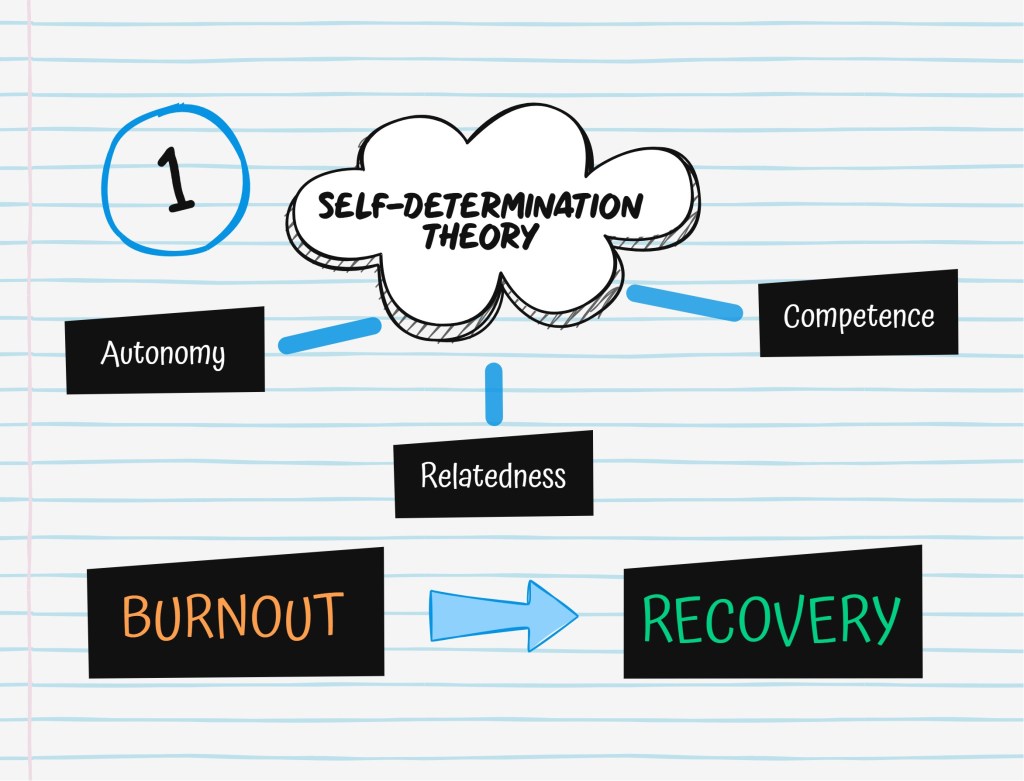
One helpful framework for understanding what those conditions look like is self‑determination theory.
In this guide, we’ll explore:
- Part 1
- what self‑determination theory (SDT) is
- how SDT helps explain autistic burnout
- how autonomy, competence, and relatedness support recovery
- Part 2 (coming soon)
- how SDT can support you as a parent
- Part 3 (coming soon)
- practical ways to apply SDT at home
- common misunderstandings and a hopeful way forward
- Part 4 (coming soon)
- Frequently asked questions
What is self-determination theory?
Self-determination theory (SDT) is a broad psychological framework for understanding human motivation, personality and growth. It explains what people need to feel motivated, safe, and able to engage with the world.
Intrinsic vs extrinsic motivation
A key part of SDT is the difference between intrinsic motivation and extrinsic motivation.
- Intrinsic motivation comes from within – doing something because it feels interesting, satisfying, or meaningful.
- Extrinsic motivation comes from outside – doing something because of pressure, rewards, expectations, or to avoid consequences.
While extrinsic motivation can sometimes prompt action, SDT shows that intrinsic motivation is what supports sustainable engagement and long‑term wellbeing.
The three psychological needs
SDT proposes that humans thrive when three universal needs are met:
Autonomy is the need to feel a sense of ownership over your actions, choices, and goals. It’s about experiencing a sense of ownership over what you do – not because someone else is pressuring you, but because the action aligns with your preferences, interests, and internal motivations.
Autonomy does not mean total independence. It means having a meaningful sense of choice, voice, and agency within whatever support you need.
A child experiences autonomy when they feel:
- their preferences matter
- they can influence what happens to them
- they are allowed to say “no”, “not yet”, or “I need a break”
- they can choose how to approach a task in a way that works for them
- adults collaborate with them rather than impose expectations.
Why autonomy matters
When autonomy is supported, children feel respected and safe. Their nervous system relaxes because they are not bracing for pressure, correction, or demands. This makes it easier for them to engage, learn, and explore.
When autonomy is not supported, children may feel:
- controlled or coerced
- pressured to comply
- disconnected from their own needs and signals
- anxious about making mistakes
- resistant – not out of defiance, but out of self‑protection.
For autistic children, autonomy is especially important because their internal signals (sensory, emotional, and cognitive) are often intense and frequently overridden by external expectations.
Competence is the need to feel capable, effective, and able to meet challenges. It’s about experiencing yourself as someone who can do things successfully. You don’t have to do things perfectly, or better than anyone else – just in a way that feels achievable and meaningful to you.
Competence grows when a child:
- has opportunities to learn at a pace that matches their energy and processing
- receives support that helps them succeed without overwhelming them
- experiences tasks that are challenging enough to be interesting, but not so difficult that they become stressful
- sees evidence of their own progress, even in small steps.
It’s not about achievement, performance, or meeting external standards. It’s about the internal sense of “I can do this”.
Why competence matters
When competence is supported, children feel more confident, more willing to try new things, and more able to cope with setbacks. Their nervous system feels safer because the world feels more predictable and manageable.
When competence is not supported, children may feel:
- constantly overwhelmed
- incapable or like they have fallen “behind”
- dependent on masking to keep up
- anxious about trying new things
- ashamed of their struggles.
For autistic children, this erosion of competence can happen easily when environments demand more than their sensory, cognitive, or emotional capacity allows.
Relatedness is the need to feel connected, understood, and valued by others. It’s about belonging – not in a superficial sense, but in a deep, emotional sense of being seen and accepted for who you are.
Relatedness is fulfilled when a child experiences relationships where they feel:
- safe
- cared for
- understood
- welcomed as their authentic self.
It’s not about constant social interaction. It’s about the quality of connection, not the quantity.
Why relatedness matters
When relatedness is supported, children feel anchored. They know they don’t have to mask, perform, or meet rigid expectations to be accepted. This sense of emotional safety helps regulate their nervous system, making it easier to learn, explore, and engage.
When relatedness is not supported, children may feel:
- misunderstood or judged
- pressured to hide their natural responses
- disconnected from peers or adults
- lonely even when they’re not alone
For autistic children, this can happen easily – not because they don’t want connection, but because the world often misunderstands their communication style, sensory needs, or emotional signals.
According to SDT, people experience the highest levels of wellbeing when all these needs are supported. When they are met, intrinsic motivation emerges naturally.
For neurodivergent children, these needs are often disrupted because of how the world around them is structured.
When autonomy, competence, and relatedness are supported, children’s wellbeing improves, and they can engage more easily – not because they are being pushed, but because they want to. When these needs aren’t supported, stress accumulates, and over time, this can lead to burnout.
Burnout as a mismatch, not a failure
Autistic burnout usually results from a prolonged mismatch between a child and their environment.
Over time, this mismatch drains their mental, emotional, and physical resources until their energy reserves are completely depleted.
Burnout is not a failure within the child. It is a signal – a clear message that the demands placed on them have exceeded what their nervous system can sustain. In other words, the environment has not been meeting their needs.
Environments that rely heavily on extrinsic motivation, such as pressure, rewards, consequences, or rigid expectations, can be especially exhausting for neurodivergent children. These approaches often override a child’s internal signals and undermine their sense of autonomy.
- Relatedness suffers when a child feels misunderstood, corrected, or pressured to mask their natural responses. This weakens their sense of connection and belonging, leaving them feeling isolated even when surrounded by others.
- Autonomy is eroded when expectations are strict, flexibility is limited, or sensory experiences are outside the child’s control. When a child feels they have little say in their day, their sense of agency diminishes.
- Competence is undermined when environments demand more than the child can manage, especially without appropriate support or adjustments. Constant overwhelm can make a child feel incapable, even in areas where they once felt confident.
Over time, all of this can suppress intrinsic motivation and lead to exhaustion and, eventually, burnout.
How self-determination theory supports your child
Restoring autonomy
Burnout recovery begins with reducing demands.
For a neurodivergent child, autonomy means having meaningful control over their body, environment, and energy. They need time and space to tune into their internal signals, such as how much energy they have, what sensory input they can tolerate, and what feels emotionally manageable. This shift away from external pressure allows intrinsic motivation to re‑emerge.
During burnout, many children exhibit what is often described as “demand avoidance”. In this state, even well‑intentioned autonomy‑supportive strategies can feel too directive. A choice like “Do you want A or B?” can still feel like a demand because it requires a response, decision‑making, and cognitive energy the child may not have.
For children who are experiencing demand‑avoidance due to burnout (and PDA children experiencing burnout), autonomy needs to be supported at a deeper level:
- Removing the expectation to choose
- Reducing the need to respond at all
- Offering options without pressure
- Creating low-demand environments
Language plays a powerful role in this. Shifting from pressure to acknowledgement helps reduce stress:
- “Your body is telling you that’s too much right now.”
- “You can take this at your own pace.”
- “We can leave that for now.”
- “This is here if you want it.”
- “You’ll know when you’re ready.”
In standard SDT, supporting autonomy often looks like:
- “Do you want A or B?”
For a PDA or demand-avoidant child, autonomy may need to look like:
- “There are some options here if you want them.”
- No response required.
- No options offered verbally at all – just a low‑demand environment where the child can act when ready.
Autonomy grows from having freedom from pressure and expectations, as well as the freedom not to engage.
Supporting autonomy in this way helps a child feel safe enough to re‑engage on their own terms, rather than being driven by compliance or avoidance. This safety is what allows intrinsic motivation to return.
“When my child first fell into burnout, her life revolved around sleep and screens. When she wasn’t sleeping, she was passively watching cartoons. We had no choice but to remove all demands and expectations from her – she had no energy to comply with requests, and even asking her what she might like to eat caused distress. Autonomy had to mean freedom from demands, as asking her to make even the most basic choices was too much for her to cope with.
R’s Parent
As she started to recover, I noticed that her rest became more active. She started drawing, playing games on her iPad, and listening to audiobooks. Small choices became more manageable. Her sense of autonomy and intrinsic motivation slowly began to return.
Strengthening relatedness
Connection is central to recovery. Feeling understood is especially important for neurodivergent children, who have often been misinterpreted or corrected for behaviours that were actually signs of overwhelm.
When a child feels safe, accepted, and understood, their nervous system can begin to settle. This emotional safety is the foundation for other progress, including the return of intrinsic motivation.
Relatedness during burnout often looks like:
- spending time together without expectations
- engaging in low‑demand shared activities
- communicating understanding rather than correction
- accepting communication differences
- offering presence without requiring interaction.
Simple, low‑pressure connection might be:
- sitting together in the same room
- reading side by side
- doing separate activities at the same table
- listening to music together
- drawing or crafting quietly.
These moments show your child they are not alone. They rebuild trust and a sense of belonging, even without talking or direct engagement. However, there will be moments when your child genuinely needs solitude, and honouring that is just as powerful – by stepping back when they ask, you show that their boundaries matter and that their needs are valid and respected.
When you spend time together, you don’t need to “do” anything special. Sometimes, just being near someone who feels safe is enough. This sense of safety allows the nervous system to settle, which is essential for recovery.
“As she began to feel safe and understood, her sense of relatedness began to rebuild. After a long time of completely rejecting family members, she started to accept a little company. She even started leaving her room to watch TV in the lounge with her sister and me.”
R’s Parent
Rebuilding competence
Burnout often leaves children feeling unable to do things they once managed. Rebuilding competence means starting from where they are now, not where they used to be.
This involves:
- Beginning with very small, achievable steps
- Valuing engagement over outcome
- Recognising effort without increasing demand
- Adjusting expectations to match current capacity
For example, if daily living tasks feel overwhelming, competence‑supportive scaffolding might look like:
- Micro‑steps for dressing – offering one item at a time (e.g., “Here are your socks when you’re ready”).
- Co‑regulation before tasks – sitting together quietly or using a sensory tool before attempting the next step.
- Shared initiation – starting the task together (e.g., “I’ll hold the sleeve open; you can slide your arm in if you want”).
- Reducing the task load – choosing clothing that’s easier to put on (loose and soft with no or few fastenings).
- Offering partial participation – letting your child do one small part (e.g., “I can help with everything. If you want, you can pull the zip up at the end.”).
Competence grows when a child experiences success that feels manageable and internally meaningful. When children are pushed through rewards, consequences, or expectations, pressure increases and their sense of capability can erode further.
Your child’s sense of competence strengthens when they feel:
“This is manageable,” rather than “I have to do this.”
Small, authentic successes rebuild trust in their own abilities. Over time, this supports the return of intrinsic motivation and a renewed sense of capability.
“Later, as her drawings improved with all the practice she’d been getting, she began to feel more competent. She taught herself digital drawing and used that as a springboard into animation and 3D modelling. She’s entirely self-taught – deciding what she wants to learn, when and how.
R’s Parent
Spending time on her artwork and designs is very therapeutic. No one tells her what to work on – her motivation is entirely intrinsic, and it’s strengthening her sense of identity and wellbeing. She is witnessing her competence improve and feels confident enough to ask family members and trusted adults for feedback on her work. SDT might sound like a dry academic theory, but I can clearly see it in action in my child’s recovery.”
Join us for part 2 of our exploration of how SDT can help in burnout recovery. Part 2 will explore how SDT can help you navigate the challenges of burnout, rebuild confidence in your parenting, and feel less isolated (coming soon).
First published:
Last updated:
 Autistic Burnout - Family Stories
Leave a comment