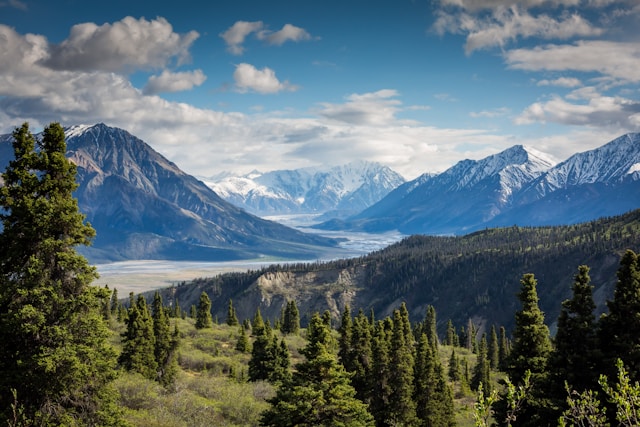
Imagine that young people must travel through the wilderness to reach their destination – ADULTHOOD. It’s an outdoor adventure in which they can only communicate with adults through a walkie-talkie.
Some young people are lucky – they have natural gifts that allow them to hitch a ride with a caravan, taking easy paths through the lowlands, travelling across rolling grasslands, through pleasant woodlands, and along meandering riverbanks.
Other young people find themselves on a more challenging route. Still, they get by scrambling through hills and forests, avoiding bear attacks, and sleeping in isolated log cabins along the way.
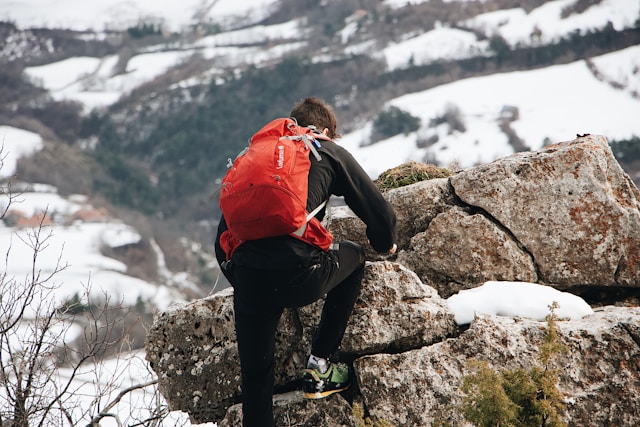
But some young people have a much more difficult journey. The only path they have to adulthood is through a high mountain pass.
The terrain’s effect on the young person will depend on their innate strengths and challenges, but the path is always rocky and poorly signposted. Mountain streams have washed away some sections, there are sheer cliff faces to overcome, the weather is closing in, and wolves may chase them.
Since they are only young, they must rely on the adults on their walkie-talkies to guide and protect them. It’s vital that their walkie-talkie is fully charged!
Parents, carers, teachers and other professionals in a young person’s life make choices and offer guidance and supplies that determine their trajectory. Adults insist young people trust them without question and follow the instructions given over the walkie-talkie.
If they fail to follow these instructions, the young person will likely be told they are behaving badly or not trying hard enough. The young person often believes this, blaming themselves if they are struggling, or worse, in their inexperience, they may not even realise they are struggling.
Some young people have hidden additional needs that make their route to adulthood much more challenging. Professional curiosity is essential to ensure those needs are identified and met. No child chooses to struggle.
briansdaughter
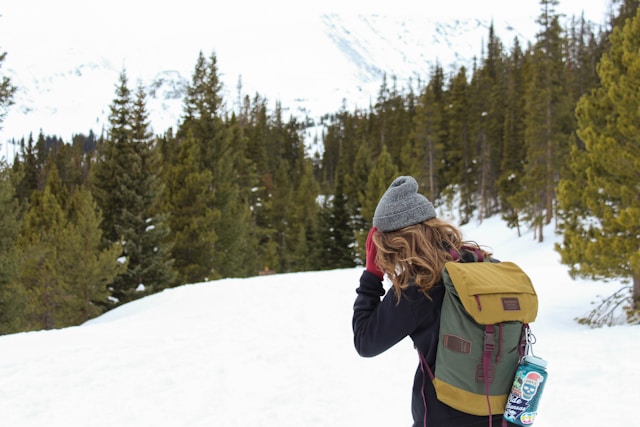
Adults are expected to make choices that support young people to learn the skills needed to survive in this wilderness. An adult might talk the young person through their challenges by helping them find their way back to the right path, explaining rock-climbing basics, or telling them which berries are safe to eat and how to purify their drinking water.
Adults might recognise that the young person is on a much more difficult path than most others and provide a range of reasonable adjustments. Such help might include first-aid stations where young people can find plasters for their cuts and bruises or a youth hostel where they can find a spare set of dry clothes or a warm bed for the night. An adult may even be able to steer the young person towards a less formidable pass through the mountains.
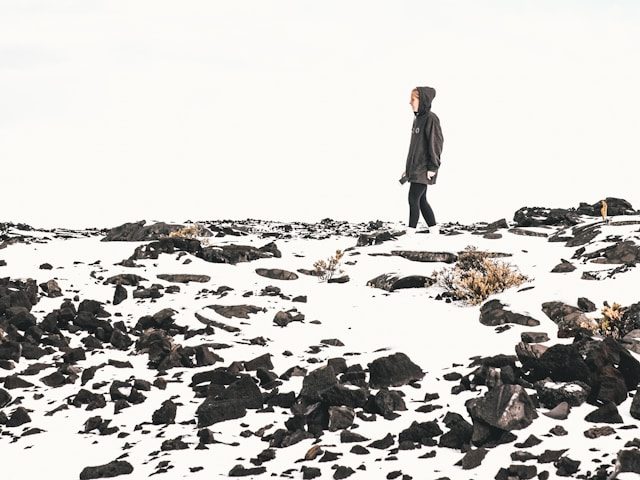
But too often, adults make assumptions that lead them to make poor choices for young people. Sometimes, they deliberately choose to allow a young person to struggle because “How else will they learn?” or “I managed in my day – they just need to toughen up!” or “All the other young people are OK!”
Sometimes, adults assume a young person is on one of the more accessible paths, so they just expect them to get on with it. Sometimes, they assume that the young person is getting on OK because they have heard them talk about spending the occasional afternoon in a pleasant mountain meadow. Sometimes, adults have too many walkie-talkies to monitor and miss a call for help. Sometimes, the walkie-talkies are full of static, and the lines of communication are broken.
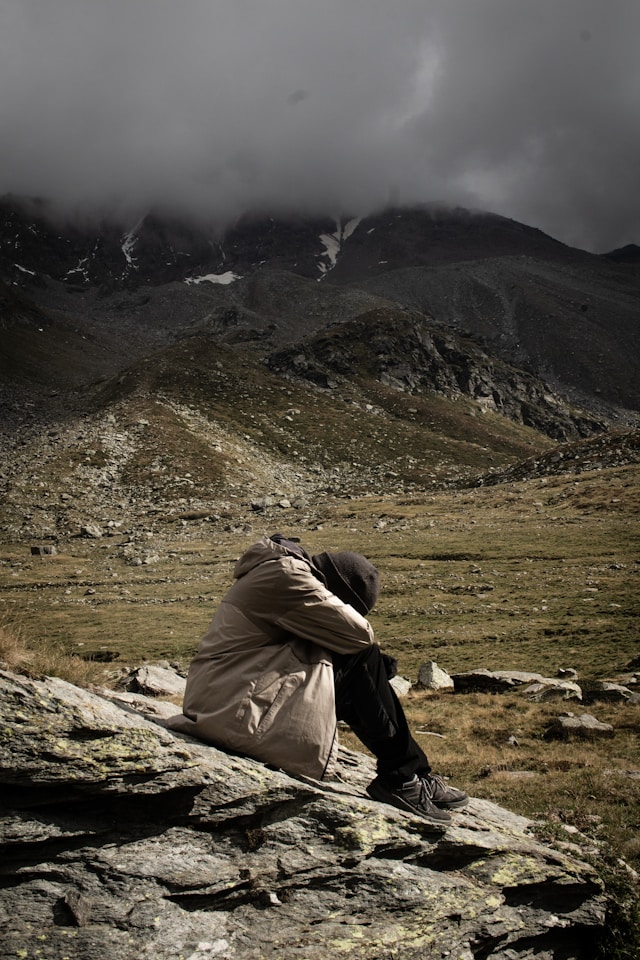
Once a young person’s challenges become too great, they are under massive strain. They may find themselves trying to scale a rock face without ropes in the middle of an ice storm at night. If they manage to scramble to the top of the cliff, they will be exhausted. They will need time to recover and likely worry about having to climb another rock face.
They may have nightmares about how hard it was. They may have flashbacks, reliving their terror. They may place a call on their walkie-talkie begging for help, but their adults may say, “Oh, you’ll be fine! You’ve already done it once – next time, it will be easier!”
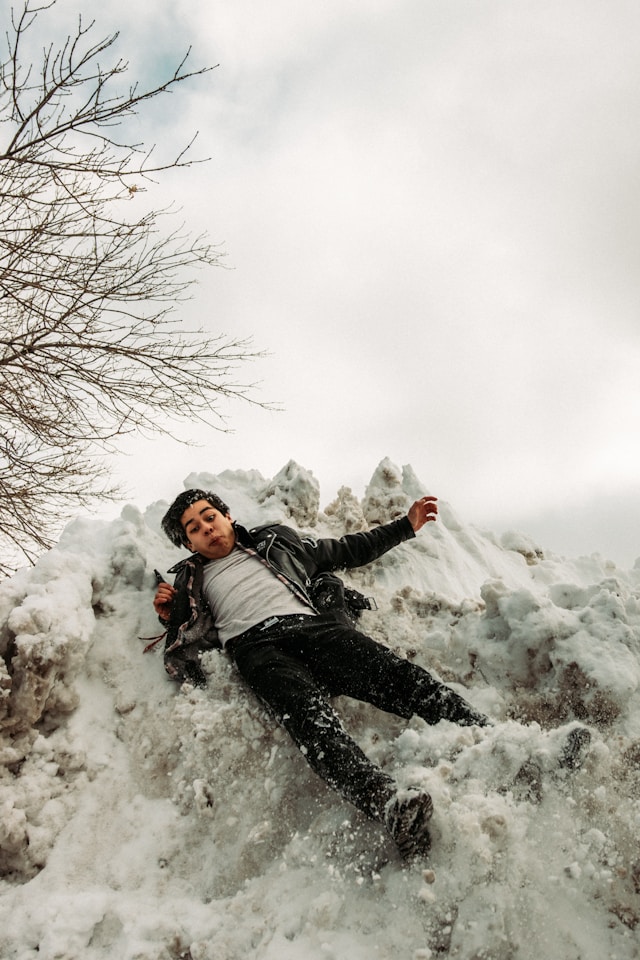
As they continue to climb, the weather worsens, the air thins, and the terrain becomes more challenging. The demands and expectations placed on the young person increase, and they are afraid – all the time.
The young person may react by sitting silently on a ledge, fearing to move. In frustration, anger and hopelessness, they may throw their flashlight, stove, pots, pans and spare clothes down the mountain.
They may scream, “I hate you!” down their walkie-talkie. They may tell their walkie-talkie, “Please tell me what you want, I’ll do anything you say!” hoping that the adult listening will reply, “It’s OK, you can stop climbing for today.”
Survival responses such as fight, flight, freeze, flop and fawn are often mislabelled as behavioural issues. A young person in survival mode is under extreme stress. They are not choosing to be aggressive, run away, ignore you, collapse or people please.
briansdaughter
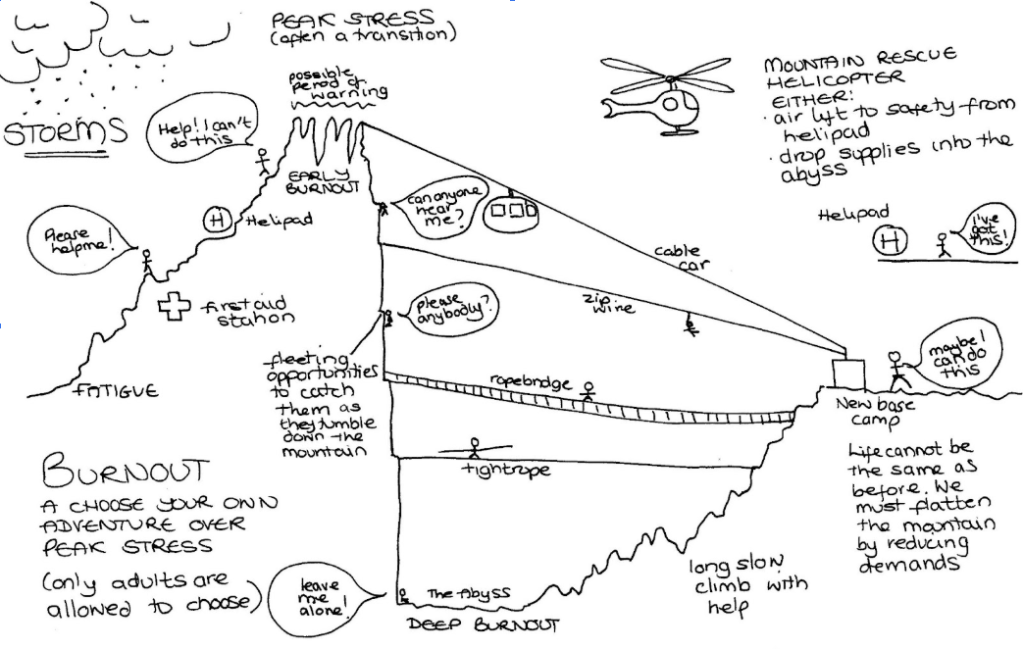
The young person is in acute or early burnout, but it’s not too late. They can still get safely down from the top of Peak Stress if they have help.
As the top of Peak Stress is hidden, permanently shrouded in an ice storm, adults can’t see how close to the edge of the Abyss of Burnout the young person is. Many adults aren’t even aware that there is a precipitous drop on the far side of this mountain and have no idea of the peril the young person is in. The young person certainly isn’t aware of the danger.
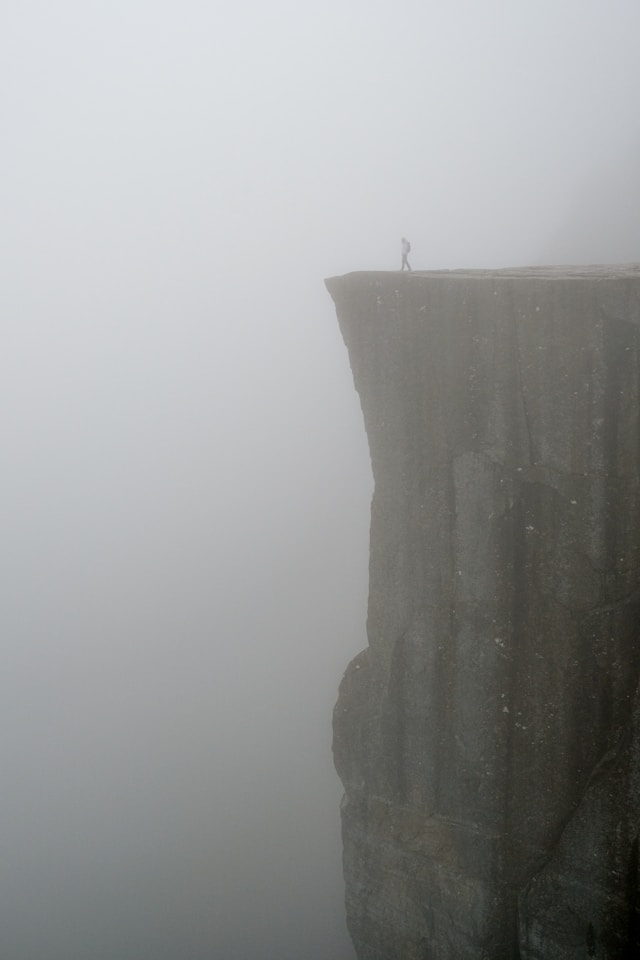
As the young person has almost certainly been displaying distressed behaviours for some time, it should be evident to the adult listening that the young person is in real trouble and desperately needs help.
Unfortunately, this isn’t always the case. All too often, the young person is forced to continue struggling and eventually stumbles off the cliff edge at the top of Peak Stress. They start to slide down the steep, craggy cliff face, and the adults caring for them must make life-defining choices very quickly.
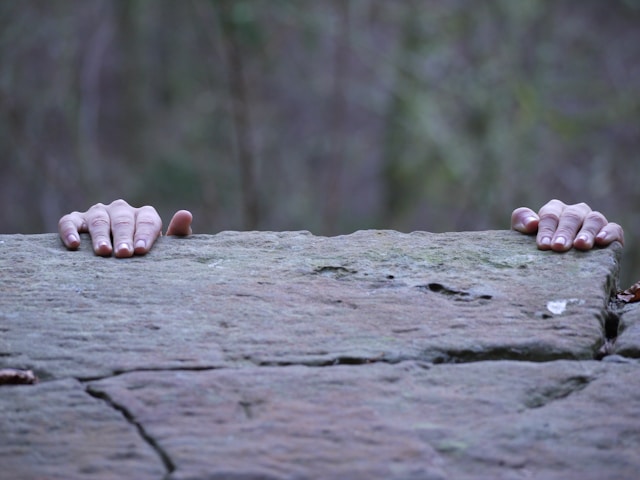
Sometimes, adults have no idea that Peak Stress exists and assume that young people are lazy or badly behaved. They continue telling the young person to climb. When the young person stumbles off the edge, they may scream for help and try to catch themselves on narrow crags and ledges as they slide into the Abyss. Even though they try to cling on by their fingertips, the fall is inevitable.
Even once they’ve hit the bottom, some adults may claim the Abyss of Burnout does not exist and tell the young person they must get up and keep climbing or risk ruining their future. But the young person is drained, spent, exhausted – they CANNOT climb. They must rest.
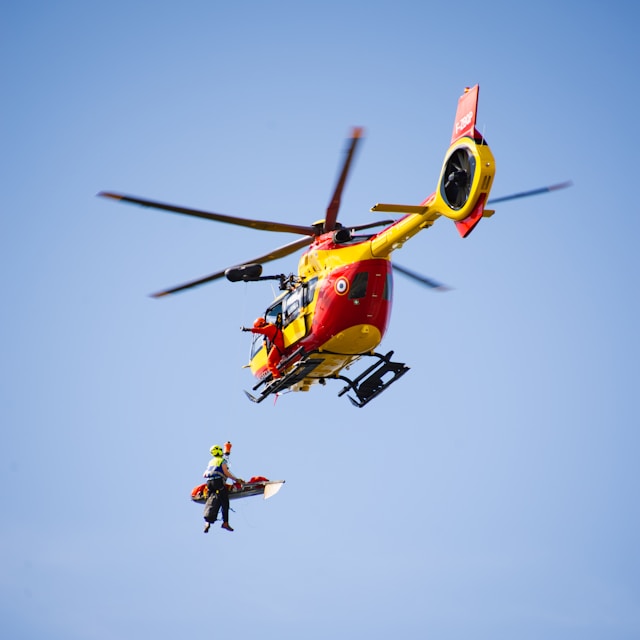
Alternatively, a passing mountain guide can try to catch them as they tumble. Early in the tumble, the mountain guide might be able to enlist the help of the Mountain Rescue Team to airlift the young person or to manoeuvre them into a cable car, getting them down the mountain as soon as possible. Once they’ve fallen further, the mountain guide might be able to carry them to a zip wire, accompanying them to the safety of the base camp.
As the young person tumbles further into the Abyss of Burnout, the recovery methods become more challenging.
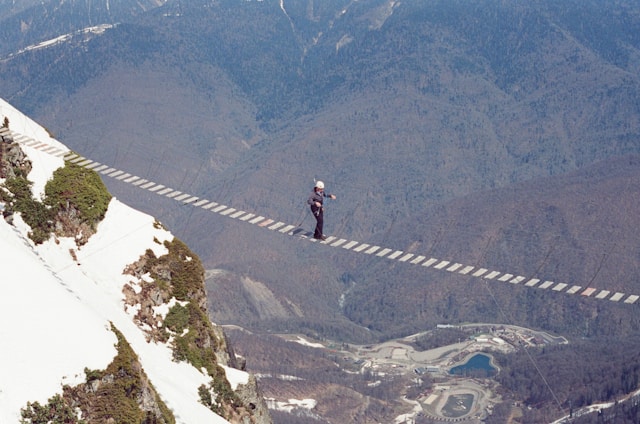
The young person is utterly exhausted and might be unable to manage the journey across the rope bridge or balance on the tightrope, even with the mountain guide’s help. Even if the guide has tried to catch them, they may continue falling.
The young person’s energy is spent, and all they can do is lie down at the bottom of the Abyss of Burnout and rest. The mountain guide will have to scramble down after them and sit quietly with them, bringing them food and water until they have recovered enough to move.
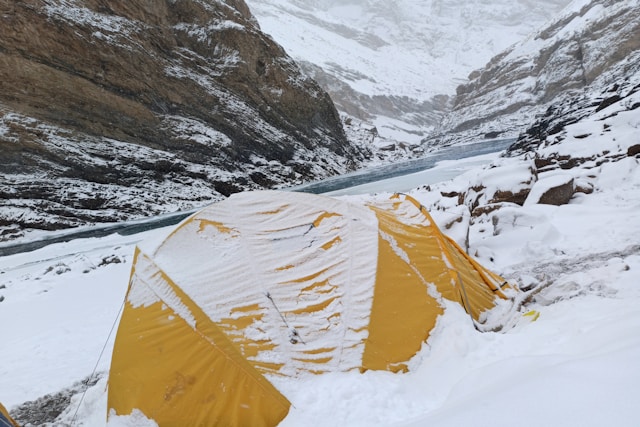
Once a child or young person enters chronic or deep burnout, their internal resources are exhausted. Forcing them to keep going will only increase their distress, add further layers of difficulty to their recovery, and extend how long it takes for them to recover.
briansdaughter
So, if we know about Peak Stress and the Abyss of Burnout, why are young people still travelling this path? Perhaps it is because many adults whose road to adulthood was via one of the easy paths assume that all paths are accessible and that young people are making a fuss over nothing.
Other times, the adult monitoring the walkie-talkie hears the young person’s cries and asks for help from the Mountain Rescue Team. They hope the Mountain Rescue will airlift the young person to safety or parachute in a mountain guide to help them. But often, this doesn’t happen or doesn’t happen quickly enough. The Mountain Rescue Team may be overstretched and lack sufficient resources to help.
Other times, the adults running the Mountain Rescue Team do not believe that young people can get stuck in the mountains, and if they do, it must be their own fault (or their parents’ fault).
Parent blame is real and extremely damaging. It shifts responsibility away from services and onto an already struggling family. The consequences of this disbelief can be devastating.
briansdaughter
Whatever the reasons, ultimately, the responsibility lies with adults. Burnout is never the young person’s fault. Adults must take responsibility for watching the mountain slopes for struggling young people and ensure they can access first-aid stations and youth hostels.
Adults must check in with young people regularly to see how they are getting on. By being curious rather than assuming a young person is “fine” because they aren’t calling for help on their walkie-talkie, adults can learn to recognise the signs of fatigue and overwhelm in the young people in their care.
Adults can also explore the reasons behind a young person’s behaviour rather than making assumptions about its meaning. Moreover, the Mountain Rescue Team and their managers can do all they can to learn about Peak Stress and the Abyss of Burnout so that they know what to do when they hear of a young person struggling.
In an ideal world, a helipad would be built on the mountain so that young people could be airlifted to safety before they reached Peak Stress. Then, they would never have to risk falling into the Abyss of Burnout again.
This may be a choose-your-own-adventure story for adults, but for too many young people, it’s a tragic tale of society failing them.
THE END.
First published:
Last updated:
 Autistic Burnout - Family Stories
Leave a comment